Tiffany Fleming Director of Education and Outreach

Tower Road
Cornell University
Ithaca, NY 14853
607-254-6732

Email Email Us

Education and Outreach Home > About PGRP Summer Internships
REU Program
  1. Internships
  2. Interns
  3. FAQ
  4. Areas of Research
  5. Apply
  6. Recommend a Student
  7. Program Deadlines
  1. Plant Genome Internship
  2. Bioinformatics Internship
  3. Science Education Internship

Plant Genome Internship

PGRP

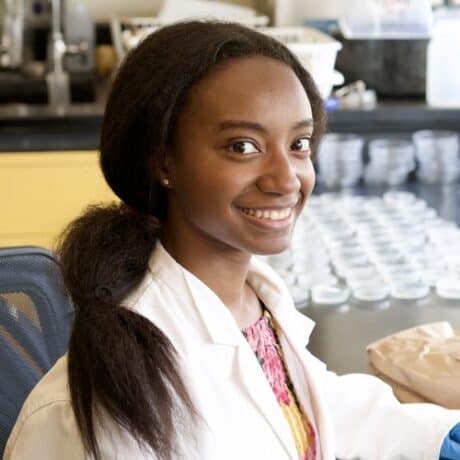
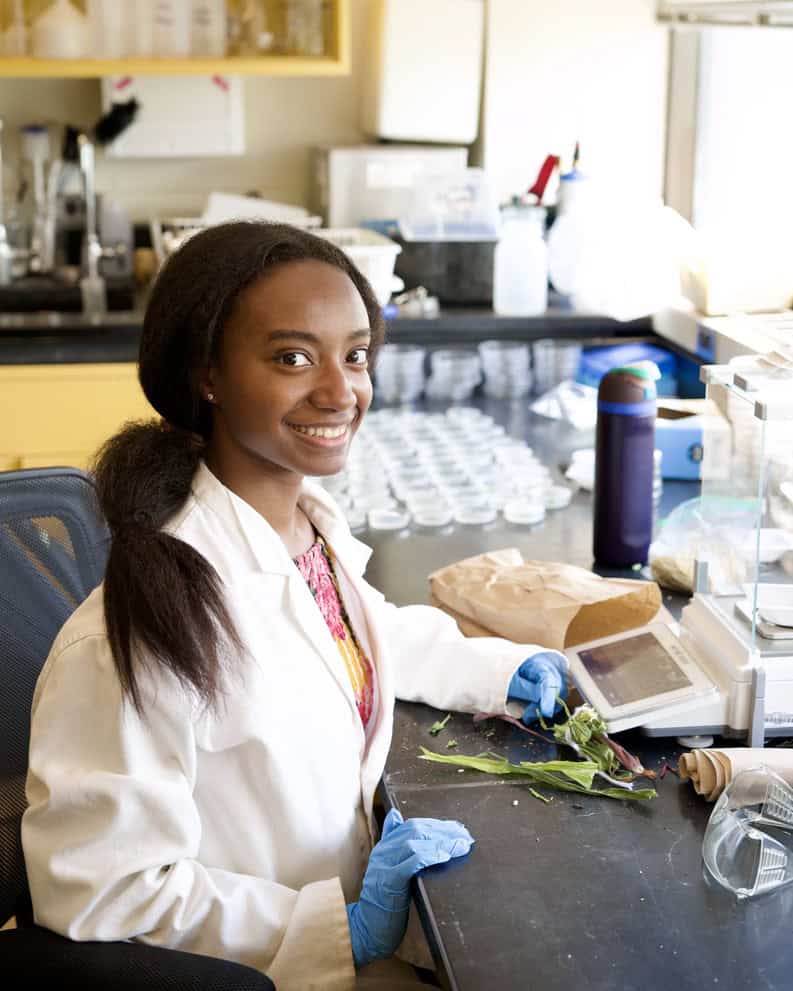
Since 2003, undergraduate students from across the country have been coming to the Boyce Thompson Institute and Cornell University to participate in our 10-week summer internship program. Select local (Tompkins County) High School students also participate in a similar internship program for 6 weeks. The internship program involves students in laboratory-based Plant Genome Research Projects (PGRP). By participating in PGRP summer internships, students gain a broader knowledge of plant genetics, take away a better understanding of genuine scientific research and connect with others that are interested in careers in science and research. Students in the internship program will have the opportunity to:

  • Work closely with graduate students, postdoctoral fellows and scientists to investigate current topics in plant science
  • Join a participating lab according to preference and availability
  • Be mentored by a graduate student or postdoctoral fellow
  • Learn the latest in molecular biology techniques
  • Participate in fieldwork, depending on the lab
  • Work on a supervised independent project within the framework of the mentor's research program
  • Attend lab meetings, read and discuss recent literature related to their project
  • Attend a weekly plant science seminar with scientists from BTI, Cornell and the USDA

Student Symposium Collapse

Eligibility Collapse

Selection Criteria Collapse

The Schedule Collapse

To Apply Collapse

Bioinformatics Internship

Bioinformatics

Be part of an exciting research project in the summer of 2012. The project is a large international effort to decipher the tomato genome. You can learn more about the project by visiting the SOL Genomics Network (SGN; http://solgenomics.net) and clicking on the link for the International Tomato Project.

Students will work under the direction of a small team of bioinformaticians. We are seeking highly motivated individuals with strong interests in computers and/or biology to work on computational projects such as web-programming of new tools for plant scientists and designing and implementing relational databases for genomics applications. Knowledge of programming is desired.

Bioinformatics

Compensation is provided through a stipend. In addition, a predetermined amount of funds is available towards travel expenses and to cover housing for students outside the Ithaca, NY area.

Graduate students are not eligible for this internship. The application deadline is March 9, 2012. For additional information, contact Dr. Joyce Van Eck by e-mail (jv27@cornell.edu) or phone (607-254-1284).


To Apply

We are no longer accepting applications. Thank You.

National Bioenergy and Bioproducts Professional Development Program for Educators

National Bioenergy and Bioproducts Professional Development Program for Educators

(NBB) offers summer internships for students interested in gaining cross-disciplinary experience in scientific research and science education. The NBB intern will gain first hand experience in basic plant biology research and guidance in translating basic research to the public via education and communication training. This is a great opportunity to gain research and education experience and help bridge research and outreach to better protect the environment, improve agriculture and advance human health.

What?

An NBB internship supports you in learning and professional development. Through lab training, workshops, seminars and outreach activities the intern will learn about:

  • Bioenergy
  • Bioproducts
  • Environmental Sustainability
  • Policy
  • Plant Research- Grasses, Woody Biomass, Algae
  • Economic Development
  • Science Education and Communication

Interns work full time for 10-weeks and we support you with a $4,500 stipend, Meal allowance, travel assistance and housing stipends are also provided.

How?

The Science Education Intern will…

  • Work closely with scientists, educators and graduate students
  • Work on a supervised independent research and outreach project within the framework of their mentor's programs
  • Design an educational activity or resource based on their research project
  • Attend a weekly plant science seminar with scientists from BTI, Cornell and the USDA
  • Present research to a diverse group of fellow students, scientists, and mentors at a Student Symposium

When?

This internship begins June 4, 2012 and ends August 10, 2012.

Who?

Undergraduates, Graduate Students, Postdocs, Classroom Teachers and Educators may apply. However, the NBB intern must be either US citizens or permanent US residents (green card holder).


To Apply

We are no longer accepting applications. Thank You.

Featured Intern

Audrey_Ragsac
Klaas van Wijk LabAudrey Ragsac

When photosynthesis ceases during the night, sugars become available to plant systems by the breakdown of starch stored in chloroplasts. In vitro, β-amylases (BAMs) degrade starch by hydrolyzing an ...

Read More

Intern Alumni

Frequently Asked Questions

How will I be compensated? Collapse

How does the housing work? Collapse

Do you provide meals? Collapse

Is there a transportation service? Collapse

How will I be notified of my acceptance? Collapse

Can I apply again? Collapse

What opportunities will I have to learn about Cornell Graduate School? Collapse

What kind of extracurricular activities are available? Collapse

Featured Faculty

As world leaders in plant genome research, Cornell University, Boyce Thompson Institute, and the U.S. Plant, Soil, and Nutrition Laboratory are host to many outstanding research labs. These research facilities have built on Cornell’s long tradition of research in plant genetics and breeding to develop novel technologies, the application of which has sought to improve the scientific understanding of many aspects of plant biology. The research interests of the labs are quite varied, ranging from identifying disease resistance in crop plants to understanding how plants sense and respond to light. For more information about the research projects in the Plant Genome Research Program, please click on the project leaders, below.

Researchers and Projects

Researcher
Dr. Klaus Apel

Environmental stress response in plants

Researcher
Dr. Tom Brutnell

Ac transposon tagging and light signaling pathways in maize

Researcher
Dr. Jeff Doyle

Molecular evolution of polyploids and genome expression in legumes

Researcher
Dr. Zhangjun Fei

Functional genomics of fruit flavor and nutrition pathways

Researcher
Dr. Jim Giovannoni

Ripening and lycopene accumulation in tomato

Researcher
Dr. Maureen Hanson

Gene expression in plant organelles; Improving photosynthesis

Researcher
Dr. Maria Harrison

The arbuscular mycorrizal symbiosis and plant phosphate nutrition

Researcher
Dr. Jian Hua

Environmental response in plants:Pathogens and Temperature

Researcher
Dr. Georg Jander

Genetics and biochemistry of plant-insect interactions

Researcher
Dr. Leon Kochian

Root biology of aluminum tolerance and phytoremediation of heavy metals

Researcher
Dr. Dan Klessig

Signal transduction of pathogenesis related genes

Researcher
Dr. Ji-Young Lee

Gene regulatory networks in vascular plants

Researcher
Dr. Greg Martin

Molecular mechanisms of disease resistance and susceptibility in tomato

Researcher
Dr. Susan McCouch

Plant breeding genetics and rice genomics

Researcher
Dr. Lukas Mueller

SGN bioinformatics and genomics

Researcher
Dr. Klaas van Wijk

Comparative proteome analysis of C3 and C4 leaf and chloroplast development and differentiation

Researcher
Dr. Wojtek Pawlowski

Genetic regulation of chromosome behavior in meiosis and meiotic recombination

Researcher
Dr. Keith Perry

The two main emphases of research in the Perry lab are research on plant viruses and the mechanism

Researcher
Dr. Sorina Popescu

Understanding plant signaling networks through protein microarrays and molecular system biology

Researcher
Dr. Eric Richards

Epigenetics and nuclear organization

Researcher
Dr. Joss Rose

Structure, function, and metabolism of plant cell walls

Researcher
Dr. Mike Scanlon

Plant evolution, development, and morphology

Researcher
Dr. David Stern

Intracellullar communication between the nucleus, mitochondria, and chloroplasts

Apply

PGRP

We are no longer accepting applications. Thank You.

Recommend a Student

PGRP

We are no longer accepting recommendations. Thank You.

Program Deadlines

We are no longer accepting applications. Thank You.

Funded By:

PGRP Undergraduate Internships are funded by the National Science Foundation (Research Experiences for Undergraduates, REU Award #106119 to Georg Jander and Jian Hua)

National Science Foundation


USDA